The Northeast’s Highest Peak
Mount Washington
Feature by Paul Pence
Everyone had been to the top of Mt. Washington except me, so I finally took the drive to the peak
Flipbook TextAs I set out on my journey up Mt. Washington, I couldn't help but feel a sense of excitement and anticipation. I had lived in New England for 25 years and making the trip up the highest peak in the Northeast seemed to be a critical rite of passage that I had somehow missed.
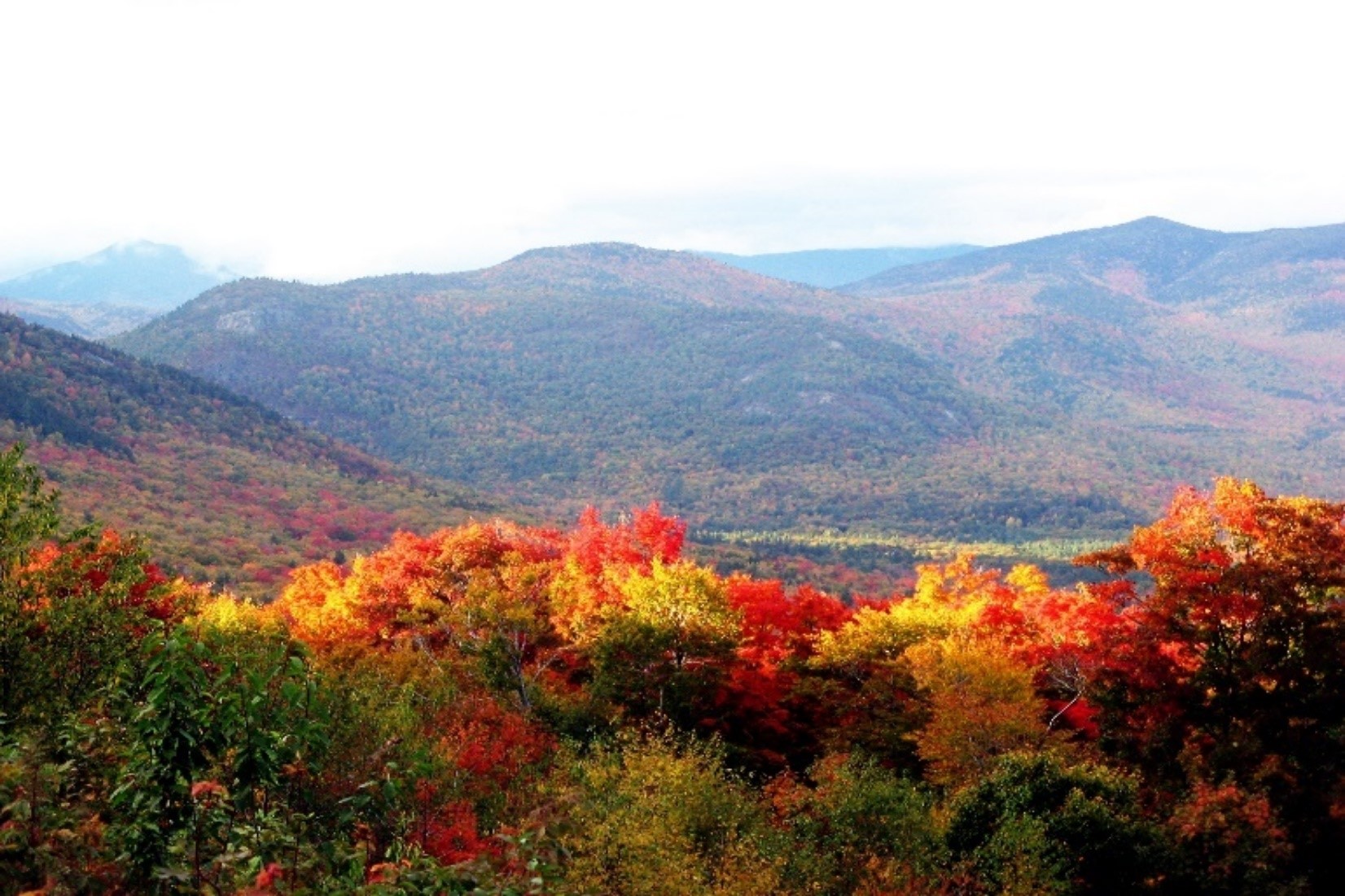
The amazing views, the rapid change from stifling summer heat to near-winter chill, and the white knuckle drive up and back down the mountain had been described over and over by almost everyone I knew, so II couldn't wait to experience it all for myself.
The most adventurous (and athletic) would take to the summit on foot, at times scrambling on hands and feet. Others would take a leisurely and memorable ride on the cog rail, but I chose to drive up the 7.5 auto road, taking about 20 minutes and climbing over 4000 feet in the process. It may be nerve-wracking for newcomers like me, but there are only about a dozen car accidents of the 45,000 cars that make the climb each year, so I wasn’t toooooo nervous.
The journey up the auto road began at the base station in Pinkham Notch between Gorham and Jackson New Hampshire. When planning your trip, it's important to note that the Mt. Washington Auto Road is only open from May through October (weather permitting) and the road can be closed due to inclement weather, so be sure to check the road's website for updates before you go. Also, bring warm clothes and a jacket, even in the summer, as the weather on top of the mountain can be unpredictable and much colder than at the base station.
As I made my way up the mountain, I was treated to panoramic views of the White Mountains, including the Presidential Range, the Franconia Range, and the Green Mountains of Vermont. The road was paved and well-maintained, but it was quite steep and winding in some areas, so I had to be prepared for a bit of a rollercoaster ride.
One of the highlights of the Mt. Washington Auto Road is the opportunity to stop at various viewpoints along the way. The first viewpoint is the Waterfall, which offered a glimpse of the Ammonoosuc River and the valley below. The next viewpoint is the Alpine Garden, where I could see a wide variety of alpine plants and wildflowers.
As I continued my ascent, I passed through the treeline and entered the alpine zone. Here, the views became even more breathtaking, with rugged peaks and rocky outcroppings all around me. The road also became steeper and narrower, so I had to take it slow and occasionally stop to enjoy the scenery. Here and there, even in the middle of the summer, there were patches of snow in shaded gullies and under outcroppings.
I didn’t see any wildlife since I was concentrating on the road, but people who slow down more than I did, stop at the viewpoints to make the drive more leisurely, and pay attention to more than the road are often rewarded with views of some of the creatures that make Mt. Washington home.
Mt. Washington is home to a diverse range of wildlife, including both alpine and subalpine species. Some of the most common wildlife that can be seen when visiting the mountain include white-tailed Deer grazing in the alpine meadows near the summit, moose in the lower elevations of the mountain, near the base station., and perhaps even a black bear, also in the lower elevations of the mountain, near the base station.
Smaller creatures including the snowshoe hare, rabbit-like animals called pika, and marmots -- large ground squirrels are often seen near the summit and in the alpine zone.
The mountain is also home to a wide variety of bird species, including the Peregrine Falcon, the Bicknell's Thrush, and the Spruce Grouse, along with a wide variety of insects, including butterflies, moths, and dragonflies.
It's important to note that wildlife sightings can be unpredictable and it's not guaranteed to see all of them. Also, it's important to always respect the wildlife and maintain a safe distance, as these animals can be dangerous if they feel threatened.
But I pressed on, since getting to the top was my goal.
The air at the top was cold enough that I had wished I had packed even more warm clothes for the trip. It was also noticeably thinner. And windy. On the day of my visit, the clouds felt like they were just an arm’s length above me as they rushed by the peak. They cast shadows on the forests and towns below. On other days it’s not unusual to get to the top and find the clouds swirling around you in a dense fog, or sometimes even a completely empty sky.
I was thrilled when I finished the final part of the climb from the parking lot to the rock cairn marking the mountain’s apex. I might not have climbed the mountain with pitons and ice picks like an alpine adventurer, but driving it was enough of an accomplishment for me.
The top of the mountain is a 60-acre state park with the Sherman Adams Summit Building, a large concrete building housing the weather observatory, snack bar, gift shop, and museum. Nearby is the stone “Tip Top House Museum”, the only survivor of a massive 1907 fire that destroyed the original observatory.
Tip Top House is a small hotel serving visitors who rode horse-drawn carriages and wagons to the chill air at the top of the mountain. It’s features a single large common room and side room with double-stacked beds that resemble ship bunks or perhaps the bunks in a train providing the shelter from the winds.
I explored the Mt. Washington museum, where I learned about the weather and climate of the White Mountains along with the history of Mt. Washington and the surrounding area. The observatory has been collecting weather data on the summit since 1932, and the exhibits feature information on the extreme weather conditions that have been recorded on the mountain, including high winds and sub-zero temperatures. There I learned about the work of the observatory's scientists, who have studied everything from atmospheric pressure to the formation of clouds. Additionally, there is a display of the instruments that have been used to collect weather data over the years, including barometers, thermometers, and anemometers.
There are also interactive exhibits that delve into the natural history of the mountain and the surrounding area. The exhibits explore the geology, flora, and fauna of the White Mountains and explain how the unique weather conditions on Mt. Washington have shaped the ecosystem.
I also learned about the early exploration of the White Mountains and the development of the tourism industry in the region. Additionally, there are exhibits on the first ascent of the mountain, by Darby Field in 1642, as well as the construction of the Mt. Washington Auto Road, which was completed in 1861.
Visitors can take a guided tour of the summit buildings and learn about the daily operations of the observatory and the work of the weather observers.
Of course I also had to stop at the gift shop that sells souvenirs, books and other items related to the mountain and its history.
The summit of Mt. Washington is also home to some of the most extreme weather conditions in the w orld. With wind gusts recorded at 231 mph, it stood for decades as the highest recorded wind speed ever recorded on the surface of the earth. The summit is also the site of the world's worst weather, with temperatures dropping as far as minus 47 degrees Fahrenheit, and visibility dropping to zero.
Hiking up to the top of Mt. Washington would have been a challenging but rewarding experience. It’s also not for the unprepared, unfit, or faint-of-heart since over 160 people have died in the process over the years. No, you don’t need to be a mountaineer climbing sheer cliffs, but you do need to be fit, prepared, and not prone to taking stupid risks.
No matter which of the several trailheads chosen, the first part of the hike would have taken me through dense forest, where I would have been surrounded by tall trees and lush vegetation. As I hiked higher, the trees would have thinned out, and I would have been presented with stunning views of the surrounding mountains. The trail would have been rocky and uneven in places, so I would have needed to pay attention to my footing.
Under ideal conditions and on the fastest trail, it takes a minimum of four hours to get up the mountain, but few climbers experience ideal conditions.
As I approached the summit, I would have encountered steep and rocky terrain, which would have required some scrambling and the use of my hands. The trail would have also become much steeper, with an elevation gain of over 4,000 feet. The final stretch to the summit would have been the most challenging, with the wind picking up as I got higher, making it harder to hike.
The quieter and slower pace would have given ample time for soaking in the natural beauty and greatly increasing the chance to spot some of the mountain’s wildlife.
Reaching the summit would have been a truly unforgettable experience, standing on the top of the highest peak in the northeastern United States, and the views from the top would have been spectacular, soaking it in with the feeling of accomplishment that I had climbed the mountain on my own two feet.
But I drove it… Adventure enough for me.
Many people prefer to take the cog train to the summit, a unique and scenic way to experience the mountain. The Cog Railway is an historic railway that has been operating since 1869, and takes passengers from the base station in Bretton Woods all the way to the summit.
The train is powered by a steam engine. As it chugs its way up the mountain, it offers stunning views of the surrounding landscape. Passengers can enjoy panoramic views without having to concentrate on keeping the car on the road.
As the train makes its way up the mountain, passengers can learn about the history of the railway and the surrounding area from the knowledgeable onboard staff. The train also makes several stops along the way, where passengers can disembark and take in the views from different vantage points.
It’s also possible to visit Mt. Washington in the dead of winter, riding snow cats up the auto road to the summit to experience the extreme weather in person. The level of preparation and cost makes this the adventure for a select few.
For me, after the museums and snack bar, admiring the view and taking lots of pictures, the rest of the trip was the ride back down the mountain. I was warned to keep my car in low gear and pulse my brakes to avoid overheating them.
What they didn’t warn me about was that I had chosen a day and time that I would encounter a road rally of hundreds of Mini Coopers working their way up the mountain. It wasn’t scary, it was just a weird sight that made a humorous ending to a great adventure.
Overall, Mt. Washington is a must-see destination for any traveler visiting New England. With its stunning views, historic significance, and extreme weather conditions, it's an adventure that you won't soon forget. Just be sure to plan ahead, pack accordingly, and drive safely, and you're sure to have an unforgettable experience!